The SWFL Waterfront Homebuyer's Field Guide: Canals, Seawalls, and Access

Few experiences match the pure joy of stepping out onto your back lanai, holding a morning coffee, and untying your boat for a seamless cruise along the Gulf of Mexico. Southwest Florida (SWFL) boasts hundreds of miles of navigable waterways, giving cities like Cape Coral national recognition as a boater's paradise. However, purchasing a waterfront property involves far more than admiring a sunny view over the water.
Navigating complex canal networks, evaluating seawall conditions, and verifying vessel clearances requires a practical eye. If you want to avoid purchasing a deep-draft sailboat home only to discover your boat cannot clear the neighborhood bridge, you need a clear strategy. Here is your essential field guide to buying waterfront real estate in SWFL.
Direct Access vs. Gulf Access: Know Your Route
In Southwest Florida real estate listings, water access generally falls into two distinct categories: Direct Access and Gulf Access. Understanding the operational difference between them is vital for vessel owners.
Direct Access, frequently referred to as sailboat access, means there are no physical bridges or water control locks between your dock and open bodies of water like the Caloosahatchee River or the Gulf of Mexico. This access type is essential for sailboats, tall sportfishing yachts, and cruisers with fixed radar arches or tall T-tops.
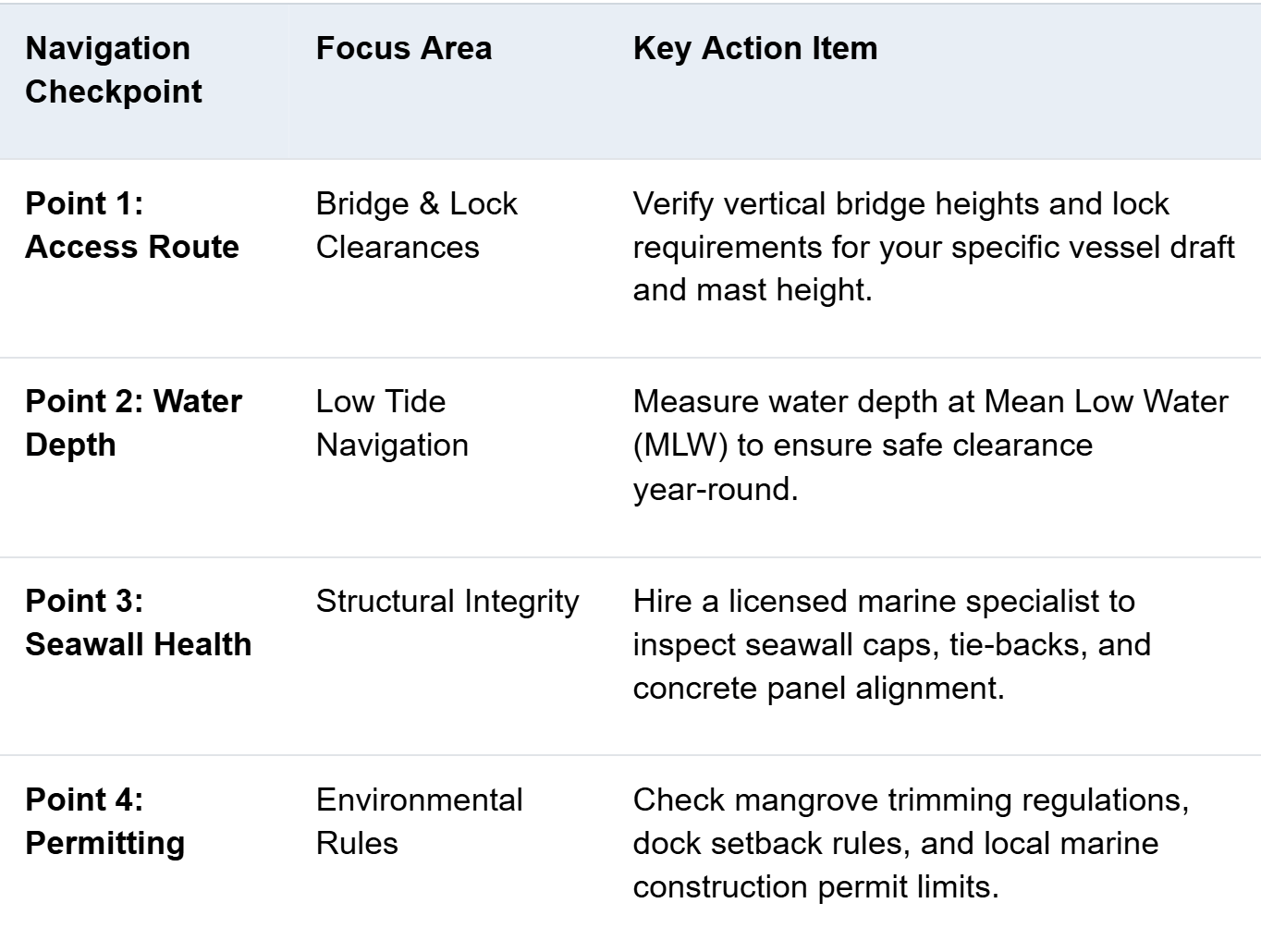
Gulf Access means you can reach open water, but your navigational route includes one or more fixed overhead bridges or water control locks. Fixed bridges across SWFL canals typically offer vertical clearances ranging between 6 and 12 feet at mean high tide. If your vessel requires 13 feet of vertical clearance, a fixed bridge turns your boating retreat into a very expensive stationary lounge. Always measure your boat from the waterline to its highest point before selecting a canal location.
Tides, Depths, and Docking Dynamics
Water depth inside canal systems can vary significantly based on seasonal tides, rainfall, and location within the waterway network. A canal that appears deep and inviting during a summer high tide can transform into a shallow mudflat during a winter low tide.
When evaluating a prospective waterfront home, ask for verified water depth at Mean Low Water (MLW). Deep-draft powerboats and sailboats generally require at least four to five feet of depth at low tide to prevent propellers and keels from stirring up shallow canal bottoms. Additionally, inspect the weight capacity and mechanical condition of any existing boat lift. Upgrading or retrofitting a boat lift requires municipal permits and specialized marine contractors, so knowing the existing infrastructure capabilities upfront prevents budget surprises.
Seawalls: The Underground Anchor of Property Value
While home buyers naturally focus on interior finishes and open floor plans, the seawall is arguably the single most important structural element of a waterfront property. The seawall retains soil, protects against land erosion, and stabilizes your yard against storm activity.
Seawalls in SWFL are primarily constructed using interlocking concrete panels or high-density corrugated vinyl. During an initial property walkthrough, look for visible warning indicators such as wide vertical panel cracks, leaning or bowed seawall sections, soil sinkholes forming behind the concrete cap, or exposed, rusting rebar. Replacing a compromised seawall can cost tens of thousands of dollars. Always hire a licensed marine contractor to conduct a thorough, specialized seawall inspection prior to waiving contingencies.
Environmental Rules and Permitting
Southwest Florida's coastal ecosystems are protected by state and environmental regulations. Before planning dock expansions, adding jet ski davits, or modifying your shoreline, familiarize yourself with local setback rules and environmental ordinances.
For example, native mangrove trees play a vital role in shoreline stabilization and estuarine health. Trimming or removing mangroves is governed by strict state statutes and often requires licensed, certified trimmers. Understanding local environmental boundaries ensures you protect your coastal investment while keeping the surrounding ecosystem healthy and compliant.
Dropping Anchor with Confidence
Finding the perfect waterfront home in Cape Coral, Fort Myers, or Naples comes down to aligning your vessel specifications and lifestyle goals with the right canal network. By measuring bridge clearances, verifying low-tide depths, and inspecting seawalls early, you can buy your waterfront home with complete peace of mind.
Take the Next Step in Your Waterfront Search
Ready to find your ideal waterfront haven in SWFL? Don't leave your boating lifestyle to chance! Contact our expert team today for a customized waterfront property search and a marine infrastructure review. We will help you find the ideal dock for your vessel so you can set sail with confidence this season.
Recent Posts